
Published estimates put the translation rate per word at roughly $0.05–$0.50. For a basic estimate, multiply the words you’ll pay for by the agreed rate. Use that range to plan your budget; it is not a guaranteed book translation quote. The actual cost depends on the languages you’re translating from and into. It also depends on the review needed and the work to prepare your file.
To compare quotes fairly, each must cover the same work. Translation, review and formatting costs should be listed separately. The sample budget below uses EPUB, an ebook file format. It shows how the cost of making a book readable differs from preparing a translation for publication.
How per-word pricing becomes a book translation bill
Multiply the agreed word count for billing by the quoted rate to get the translation charge. For example, 1,000 source words × $0.15 = $150 for translated text, before any separately charged work.
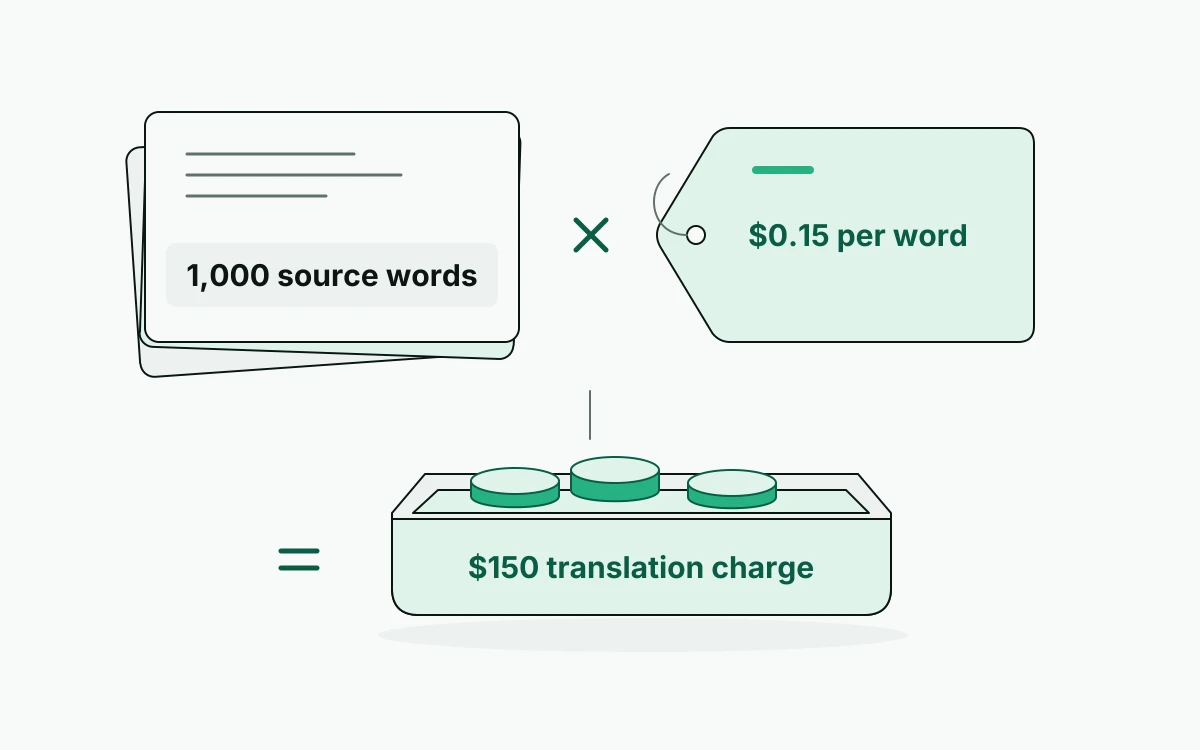
Source-word billing counts words in the original manuscript. Target-word billing counts words in the finished translation. With target-word billing, you may not know the final count until delivery. The quote should state which count applies, the currency and the unit used for billing. “Per word” alone leaves those details open.
The broad range above helps with early planning, but it is not a universal professional average. It does not describe a standard package either. Ask for each of these items separately:
- Translation: producing the translated text, with a clear description of any checking included.
- Editorial review: a separate check for meaning, consistency, tone and ease of reading.
- File delivery: whether you receive plain text, a document you can edit or a usable EPUB.
- Layout and formatting: rebuilding headings, tables, footnotes and other parts of the page or book.
The original file affects how much work is needed. An EPUB and a scanned PDF need different preparation. A scan may need text recognition, which turns images of words into text, followed by cleanup. The file then needs conversion before work on the EPUB can begin. That preparation should have its own charge, separate from translation.
For Chinese, Japanese or Korean, confirm whether the quote counts words, characters or blocks such as a million characters. You cannot compare a character rate directly with a word rate. For a usable total, ask the provider to count your actual file using its billing unit. It should then show you the result.
Get a comparable quote for your specific book
Send each provider the same book file and written brief describing the work you need. This lets you compare total prices for the same work.
- Attach your EPUB or PDF and give the word count in the original book. Note whether that count includes footnotes, captions and appendices. The provider should confirm how many words you will pay for. They should also say whether they charge by words in the original or the translation.
- State which language you are translating from and into, along with the subject and deadline. “English to Spanish, historical novel, delivery by [date]” is more useful than “Spanish translation.” Include the regional version of the language you want, too. Less common language combinations, specialist subjects and urgent deadlines can raise the price.
- Explain whether you need the translation for private reading or publication. Describe how you want it checked and delivered. Ask who checks it against the original and whether the price includes a separate editor. You also need to know which final file you will receive. For example: “Return a translated EPUB with chapter headings and footnotes preserved.” If you have an approved glossary, include it. This list of agreed names and terms can reduce corrections and revision costs.
- Ask for a total with separate prices for translation, review, and file preparation or formatting. Each quote should state the currency and how the work is charged, such as by word. It should also list how many rounds of changes are included and the charges for later changes. For a full book, ask whether there is a discount for the amount of work. Do not assume one applies.
If a provider suggests a different level of checking or final file type, request a separate price. Keep the original brief unchanged so you can still compare the quotes.
A 60,000-word English-to-Spanish EPUB budget
Translating a sample novel.epub with 60,000 English words into Spanish would cost $6,000–$15,000 at the rates below. This example budget is not an actual offer; all amounts are in USD.
Each row uses the word count of the original English file. The Spanish word count does not affect these totals.
| Translation rate per source word | Translation subtotal |
|---|---|
| $0.10 | $6,000 |
| $0.15 | $9,000 |
| $0.25 | $15,000 |
Each row is a separate budget option. Your project total will also need separate quotes for this work:
- Review: editing by someone who knows both languages, checks against your glossary (your list of terms), and proofreading.
- File preparation and formatting: any cleanup of the EPUB ebook file, plus checks of the translated book’s chapters, navigation links and page layout.
Review matters for a novel. For example, “Break a leg!” → “¡Mucha suerte!” keeps the intended wish of good luck. Machine translation can miss this saying and turn it into an instruction to break a leg. The individual words may still look correct. For publication, budget for a qualified reviewer to check meaning and voice throughout the book.
For private reading, you can also get a separate price for translating a whole book with AI. The estimates above cover human services, not software. DualBook translates EPUB books chapter by chapter, keeps names and terms consistent across chapters, and lets you read the original and translation side by side. This helps you check a passage. Publishing the book still needs a separate review budget.
Quote traps that can change the total
- If the provider bills by translated words, ask for a fixed total or an upper limit.
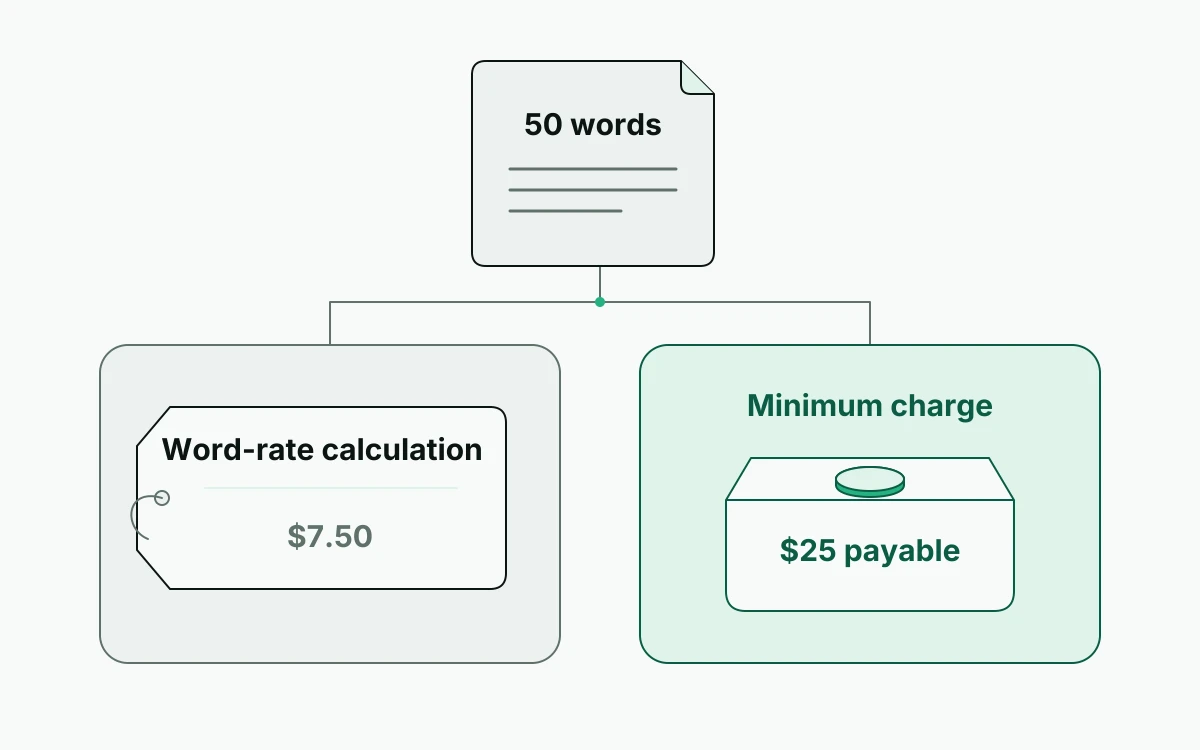
- Minimum charges and discounts for repeated text can change the bill. A 50-word document with a $25 minimum costs $25, even though the word rate gives $7.50. Translation memory stores translations so they can be reused across a project. For repeated passages, ask whether it lowers charges for identical or similar text. The quote should also show how those discounts apply.
- A promise that seems far too cheap and fast needs a closer look. If a provider promises whole-book delivery within an hour, ask what work is included. Find out who checks the meaning, whether a sample is available, and what corrections are included. Judge the price against the work covered. A low price alone does not mean poor quality.
Choose the workflow your reading or publishing goal needs
For personal reading, budget for access to a usable translation. For publication, budget for a translated book, human review with clear tasks and finished files.
- A passage or occasional chapter: Free or paid general translation engines and chatbots suit short extracts. Before paying, compare their usage limits and the work needed to move text in and out.
- Reading on a website: Browser extensions, tools added to your browser, suit web pages and web novels. They let you read online. They are mainly suited to reading online; check export options if you need a translated EPUB to keep.
- Preparing a file: Desktop converters change file formats; they do not translate the book. DualBook also offers free converters for PDF, MOBI and Word files when you need an EPUB for its book workflow.
- Reading a whole book: Whole-book translators and bilingual readers, which show both languages, better suit translations that need to stay consistent across chapters. Compare what each includes: a translated file or reading access. Neither a translated file nor reading access alone guarantees publication-ready work; check whether qualified human review and final file checks are included.
For the English-to-Spanish EPUB, compare totals that include the same review tasks and a finished Spanish EPUB.
Compare the full package: files supplied, revisions included, delivery date and support if something needs correcting. A lower per-word rate is useful only when it buys the work your project needs.