
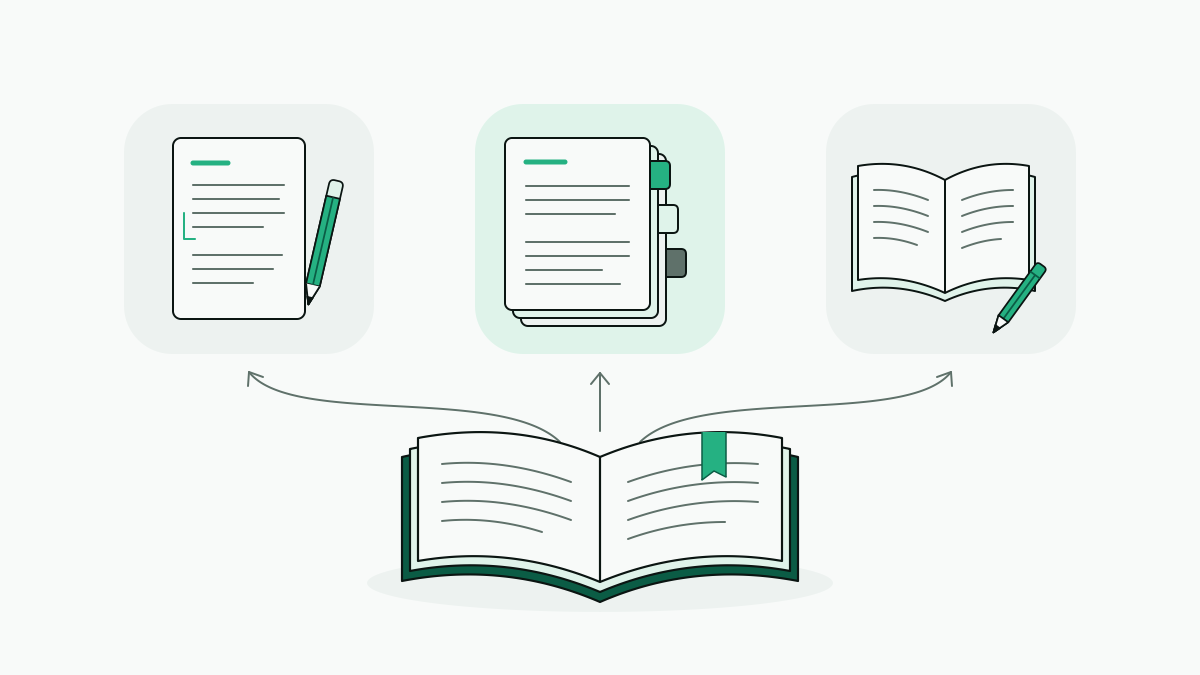
Book translation services include freelance literary translators, agencies and whole-book AI tools. We choose based on what the book is for: personal reading, a study copy, or a publication-ready edition with human review.
We start with one representative chapter and agree on what will be delivered, such as a translated EPUB for reading or an edited Word manuscript for publication. An illustrative English–Spanish chapter gives us a concrete way to compare the translation and file quality, along with the rights terms and total quote, before commissioning the entire book.
Which book translation services fit your intended use?
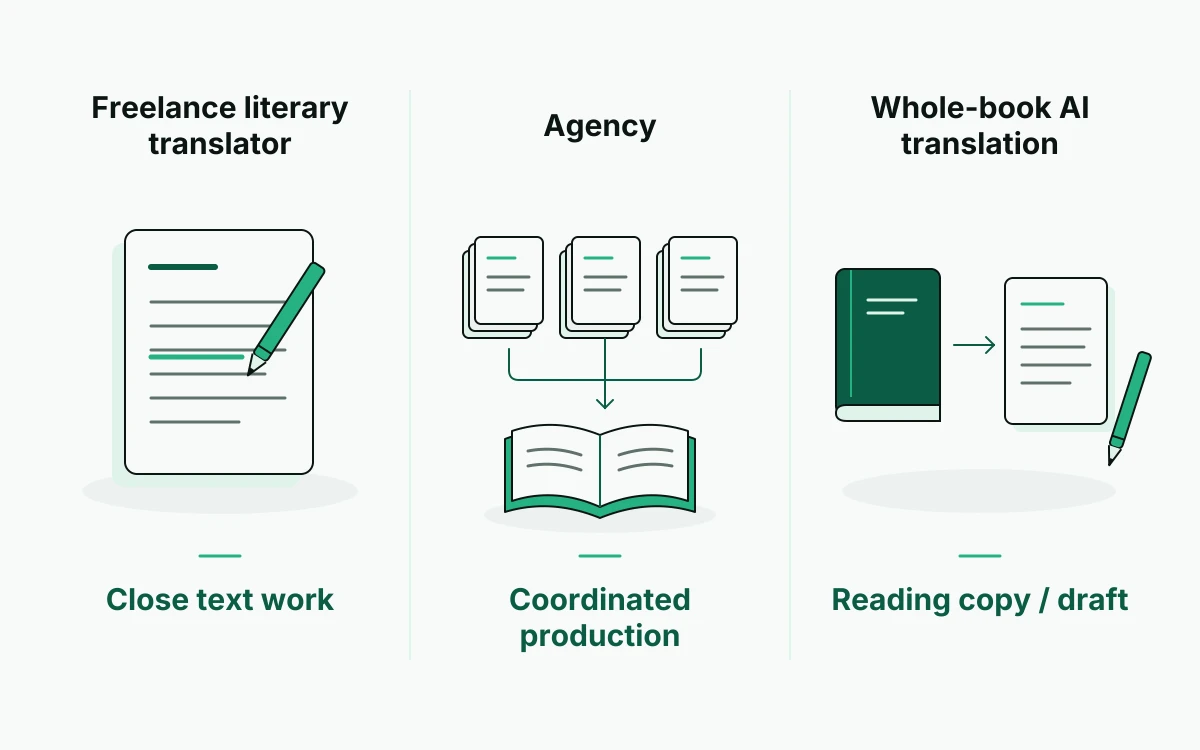
A freelance literary translator fits close work on the text, an agency fits coordinated production, and whole-book AI translation fits a reading copy or a draft for human editing. We also need to account for formatting: an edited manuscript still needs layout and export before it becomes a finished edition.
| Approach | Best fit | Deliverable to clarify |
|---|---|---|
| Freelance literary translator | Close work on voice, dialogue and specialist terms | A translated manuscript, often handled in Word; agree separately on editing and formatting |
| Translation agency | A project needing coordinated translation, editing and production | Which stages are included, who reviews the text, and which finished files arrive |
| Whole-book AI translation | A reading or study copy, or a draft for human editing | A translated EPUB, where supported; publication still needs editorial review |
Professional book translation services should spell out both the language work and the production work. We need to know what “Publication-ready” includes, because proofreading, chapter navigation and page layout are different tasks.
Other tools have narrower uses:
- General translation engines and chatbots suit passages, terminology questions and sample comparisons. Free access can help us assess wording; paid access alone does not include book editing or a finished file.
- Browser extensions suit reading text on web pages. They are less suited to preparing a reusable book edition.
- Desktop converters change file formats. A free or paid converter handles conversion, which is separate from translation.
EPUB supports reflowable reading, while PDF fixes content onto pages. In this EPUB workflow, a source such as novel.pdf must be converted first, then checked for headings, reading order and footnotes. Neither translation nor conversion guarantees identical layout. What we pay for should match the work our intended edition needs; a paid tool does not necessarily cover every stage.
Prepare one book and commission a sample
We start by finalizing the source text and writing a brief, then review a translated chapter before authorizing the rest of the book. The sample should follow the same brief and delivery format as the full translation.
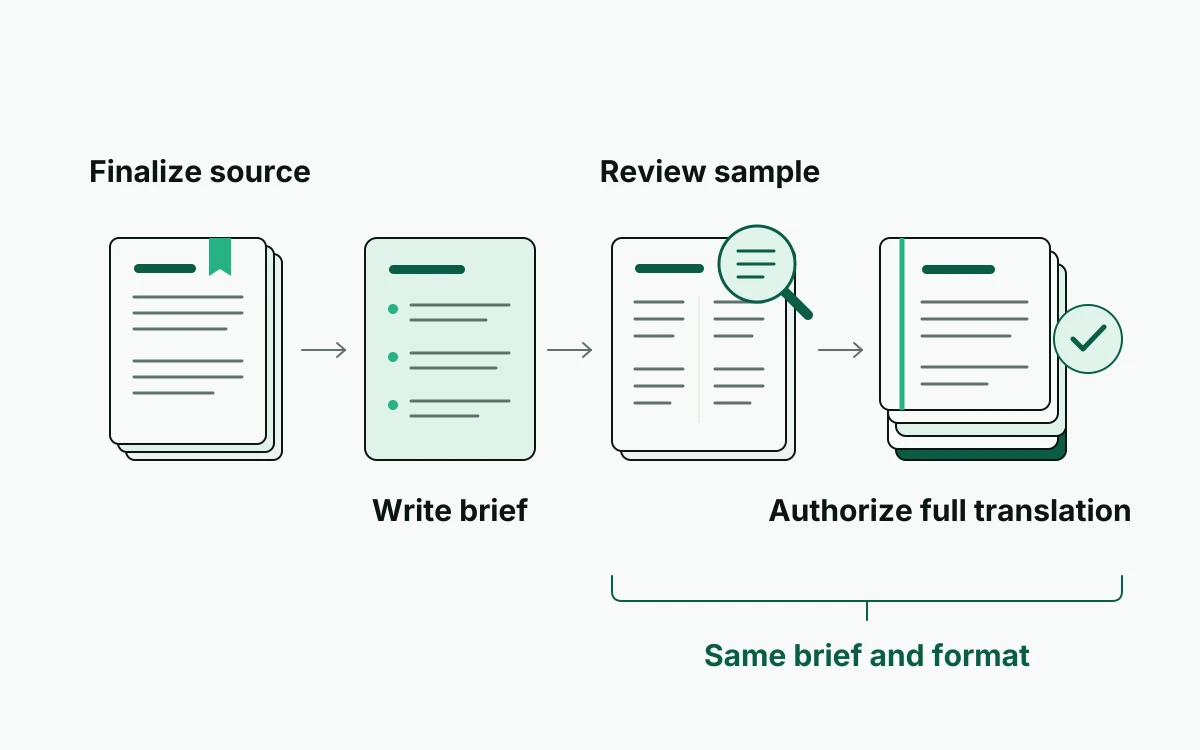
- Finish editing the source manuscript before sending it out, and mark one file as the approved source. Later changes can mean translating and reviewing the same passage again.
- A short brief should specify the target language and regional variety, audience, intended use, and required file format. For our illustrative English–Spanish EPUB, it might read: “Spanish for readers in Mexico; adult fiction; translated EPUB.” Include a glossary of names, recurring terms, and any approved translations.
- Commission a chapter that reflects the book’s real demands: dialogue for a novel, or definitions and footnotes for a textbook. Having it delivered in the agreed format, rather than as pasted text, lets us review the file as well as the translation.
- Before approving more work, compare source and translation side by side, check glossary choices, and open the delivered file. Any revisions should be requested at this stage, with the accepted choices recorded in the brief before work continues.
An English–Spanish chapter shows what to check
A useful sample shows whether the translation keeps the scene’s meaning, the narrator’s voice and the relationships between characters intact. We also want to see whether the chapter reads naturally in Spanish without losing details from the English.
For our illustrative novel.epub, we set English as the source and Spanish as the target, then use a bilingual display. DualBook translates an EPUB chapter by chapter, carries names and terms forward for consistency, and lets us review the original and translation side by side, paragraph by paragraph.
Consider this illustrative exchange before a character goes onstage:
- English: “Break a leg!”
- Spanish: “¡Mucha suerte!”
The speaker is wishing someone luck. Machine translation can struggle with context-sensitive idioms: the words alone do not tell it whether a phrase is figurative or literal, so this one can be mistaken for a request for an injury. Here, “¡Mucha suerte!” preserves the intention. Whether it fits the character’s voice depends on the surrounding dialogue.
We can then review the rest of the sample with four questions:
- Voice: Does a blunt narrator stay blunt, or has the Spanish become formal or flowery?
- Relationships: Do Spanish forms of address fit the characters’ familiarity and status?
- Continuity: Do names and recurring terms match the glossary?
- Completeness: Are dialogue, paragraph breaks and scene transitions present and readable?
For publication, a Spanish-language editor should assess the prose on its own as well as against the source. Accurate sentences can still make a stiff chapter.
What determines the cost and turnaround?
We can compare quotes fairly when they cover the same work and deliverables: translation, editing, formatting and revisions. The schedule depends on word count, language pair, translator availability and document complexity.
An itemized quote should separate:
- Translation: the manuscript word count, language pair and agreed scope.
- Human editing: who reviews the draft and what that review covers.
- Formatting: which finished files are included, such as Word and EPUB.
- Revisions: what changes are included and what triggers another charge.
For our illustrative English–Spanish EPUB, we need a guaranteed total or a clear list of possible extras. A headline translation price may leave editing, formatting and revisions outside the total. An audiobook is a separate deliverable and needs an explicit price; we shouldn’t assume it comes with the translated text.
The provider should explain how the scheduling factors above affect turnaround. Their timeline should distinguish draft delivery from editing, formatting and final revisions, and state whether the completion date is guaranteed.
For publication, we can use the quoted total to calculate:
Break-even copies = total project cost ÷ net earnings per copy, rounded up.
Net earnings are the amount we retain per sale, rather than the retail price. The total should include any other planned publication costs; sales beyond break-even contribute to profit. Before committing, we can compare that sales target with our research into the target-language market.
Use this checklist before choosing a provider
Before we pay, we need written agreement on genre expertise, feedback stages, acceptance terms and rights to the finished translation. Publishing also requires permission to distribute the translation and a separately prepared localized edition.
- Relevant samples help us match the provider to the book: literary voice for a novel, period-appropriate language for history, or Christian book terminology consistent with our tradition and glossary. For contemporary fiction, we should check that dialect has not become a collection of clichés.
- Feedback and acceptance terms belong in writing. The agreement should specify when we can comment, who handles revisions, what counts as an accepted chapter and whether we can reject work that fails the agreed sample standard. It should also establish how disagreements will be resolved before we commission the rest.
- Both sets of rights need checking. Owning a copy does not automatically give us translation rights. Before commissioning or uploading a copyrighted book for translation, check the rights holder’s permission and any applicable local exceptions; private use is not a blanket exemption. Distribution requires its own rights check. The provider’s contract must also grant us the rights we need to publish and use the finished translation.
- If we publish the translation through Amazon KDP, upload it as its own book rather than replacing the original-language edition. Its Primary Marketplace should suit its language and intended readers, with a localized title, description and keywords. For our illustrative English–Spanish translation, that means Spanish metadata written for Spanish-speaking readers. English sales copy pasted into the listing will not do.
- Market research comes before scheduling publication. If we already publish through Kindle, sales and KU reads by marketplace in KDP Reports can help identify markets to investigate. Those signals should sit alongside the market research behind our break-even calculation.