Which One Suits Your Level Right Now
Graded readers vs authentic books is really a question about your current vocabulary level. Graded readers suit learners below the B2 intermediate threshold, because their controlled headwords keep you at the 98 percent word coverage you need to understand a text without help. Authentic books suit upper-intermediate and advanced readers, with the unrestricted vocabulary, natural syntax and cultural context that full fluency calls for.
Almost every language learner hits the same wall when opening an original, native-level novel. Two sentences in, you've already met several words you don't know. Looking up every second word turns what should be an enjoyable read into an exhausting dictionary marathon, and within a few pages you've lost the thread of the story and put the book down.
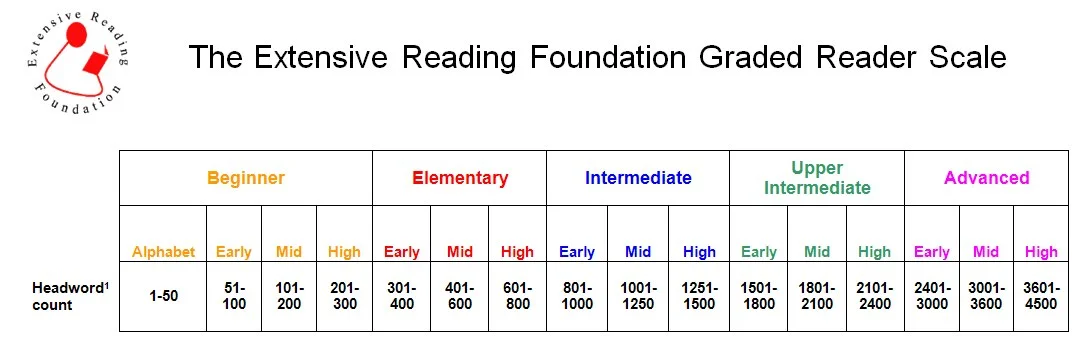
Graded readers get around this by limiting vocabulary and sentence complexity to fit specific learning levels, so you finish chapters without stalling and build reading stamina along the way. The simplified prose can feel flat, though, and in less common languages the small supply of titles eventually pushes you on to something else. Knowing what each format gives you and what it takes away makes it easier to pick the right one for where you are now.
Graded Readers vs Authentic Books, Side by Side
The main difference is controlled vocabulary on one side and the full richness of the language on the other. Graded readers cap vocabulary between 250 and 2,500 headwords so you can read as much as possible. Authentic books use the full native vocabulary, and reading them fluently takes a much larger word stock.
| Feature | Graded Readers | Authentic Books |
|---|---|---|
| Vocabulary Ceiling | Controlled headwords (typically 250 to 2,500 words) | Unrestricted native vocabulary (tens of thousands of words) |
| Target Audience | Foreign language learners at defined proficiency stages | Native speakers and fluent readers |
| Sentence Structure | Simplified syntax with progressive introduction of complex grammar | Full range of natural idioms, dialect, and complex clauses |
| Comprehension Rate | Engineered to provide 95 to 98 percent known-word coverage | Frequently drops below 85 percent for beginner and intermediate learners |
| Reading Experience | High volume and speed with minimal lookup friction | Rich cultural nuance and voice, with higher cognitive demand |
| Content Availability | Limited catalogs, heavily concentrated in major languages | Unlimited catalog across all genres, topics, and languages |
| Main Risk | Comfortable plateau if used past intermediate proficiency | Burnout and abandonment from low comprehension |
The vocabulary tiers and headword stages come from publisher catalogs such as the Oxford Bookworms Library and Penguin Readers.
What Graded Readers Do Well, and Where They Stop
A graded reader is an adapted or original book written to a set vocabulary ceiling and grammatical level. Because the vocabulary is held to a defined headword count, you can keep reading without reaching for the dictionary every few lines, and the high-frequency words come round often enough to stick.
The big educational publishers show how systematic these levels are. The Oxford Bookworms Library runs across seven stages from 250 to 2,500 headwords, with the stages in between at 400, 700, 1,000, 1,400 and 1,800 headwords. Book length grows with the vocabulary: an Oxford Starter book runs to around 1,000 to 1,500 words, while a Stage 6 volume reaches 30,000 words. Penguin Readers works the same way, with titles from Pre-A1 at roughly 350 headwords up to B2 at 2,500 headwords.
What graded readers give you above all is volume. When the text matches your level, you meet high-frequency words again and again in clear contexts, and that repetition moves a word from something you recognize to something you can recall instantly. Finishing a whole book in the language you're learning is a real boost to morale, too. If you're working out how to read books in English, starting with readers at your level heads off early frustration and keeps you reading.
The limits are just as clear. Writers have to stick to strict word lists, so descriptive nuance and the author's own voice often get thinned out. Outside the major languages there are far fewer graded titles, and the whole system tops out around B2. Graded readers are built as a bridge to real books, not a place to stay.
Authentic Books and the Vocabulary They Demand
An authentic book is written for native speakers, with no teaching constraints or vocabulary controls. It gives you natural idioms, complex sentence structures and a real literary voice, and asks for a much larger vocabulary in return.
Vocabulary density is the hard part. Research by Hu and Nation (2000) found that a reader needs about 98 percent word coverage for comfortable comprehension without help. At 98 percent coverage, roughly one word in fifty is unfamiliar, few enough to work out from context without breaking your reading flow. Once coverage drops to 90 percent or lower, comprehension without help falls apart and reading turns into a string of disconnected dictionary searches.
For all that difficulty, authentic texts are hard to beat for motivation and depth. Reading an author's original phrasing and discovering cultural nuances is genuinely satisfying. Learners figuring out how to learn English by reading books often lean on aids such as parallel texts, which put the original next to an immediate translation. With no lookups to slow you down, more of the text becomes usable, and you can start on authentic works earlier in your studies.
Matching the Format to Your CEFR Level
To choose, measure your vocabulary size and coverage against the 98 percent benchmark. Below B2, graded readers or assisted parallel text will help you most. From B2 to C2, authentic literature should come first, since that's where your working vocabulary grows.
Standard proficiency bands such as the CEFR levels give you a simple way to decide:
- Beginners at A0 to A1 need starter graded readers, since a small vocabulary can't carry unsimplified text without constant breakdowns.
- Lower-intermediate learners at A2 to B1 do best with a mix: upper-stage graded readers for speed, and parallel texts for vocabulary growth.
- Upper-intermediate readers at B2 should move to authentic literature, starting with plot-driven fiction, because graded readers add fewer and fewer new words at this stage.
- Advanced learners at C1 to C2 should read authentic books only, as their high baseline coverage makes reading without help smooth.
FAQs
Most questions about these two formats come down to timing the move from one to the other, so you build reading stamina without wearing yourself out.
What is the main difference between the two formats?
Graded readers use simplified grammar and restricted headword counts tailored to specific learning stages. Authentic books are written for native speakers without vocabulary limits. They present the full complexity, cultural context, and stylistic range of the language.
At what CEFR level should you stop reading graded readers?
Learners generally outgrow graded readers at the B2 level, where most series reach their maximum ceiling of roughly 2,500 headwords. Remaining on graded readers past B2 limits exposure to advanced vocabulary and natural phrasing.
Why do authentic books feel so difficult for beginners?
Authentic novels contain tens of thousands of unique words. According to vocabulary research by Hu and Nation (2000), unassisted comprehension requires 98 percent known-word coverage. Below that threshold, frequent unknown words disrupt context and prevent narrative comprehension.
How does parallel text bridge the gap between graded and authentic reading?
Parallel text pairs the original authentic writing with an immediate translation. This eliminates time-consuming dictionary lookups. It allows intermediate learners to read unsimplified material while maintaining high comprehension coverage for fluid reading.
To start reading authentic literature with sentence-by-sentence support, explore the side-by-side classic editions on dualbook.